Executive Summary
The Surprising Truth About PostHoliday Driving
Conventional wisdom says the days after New Year's Eve should be dangerous.
Hungover drivers. Exhausted travelers. People rushing back to work after two weeks of holiday excess. The data tells a different story.
January 2025 flips the script: the first week of the year was actually safer than average, while the middle of the month emerged as the real danger zone.
The Story in Five Acts: January Week by Week
The Thursday Problem
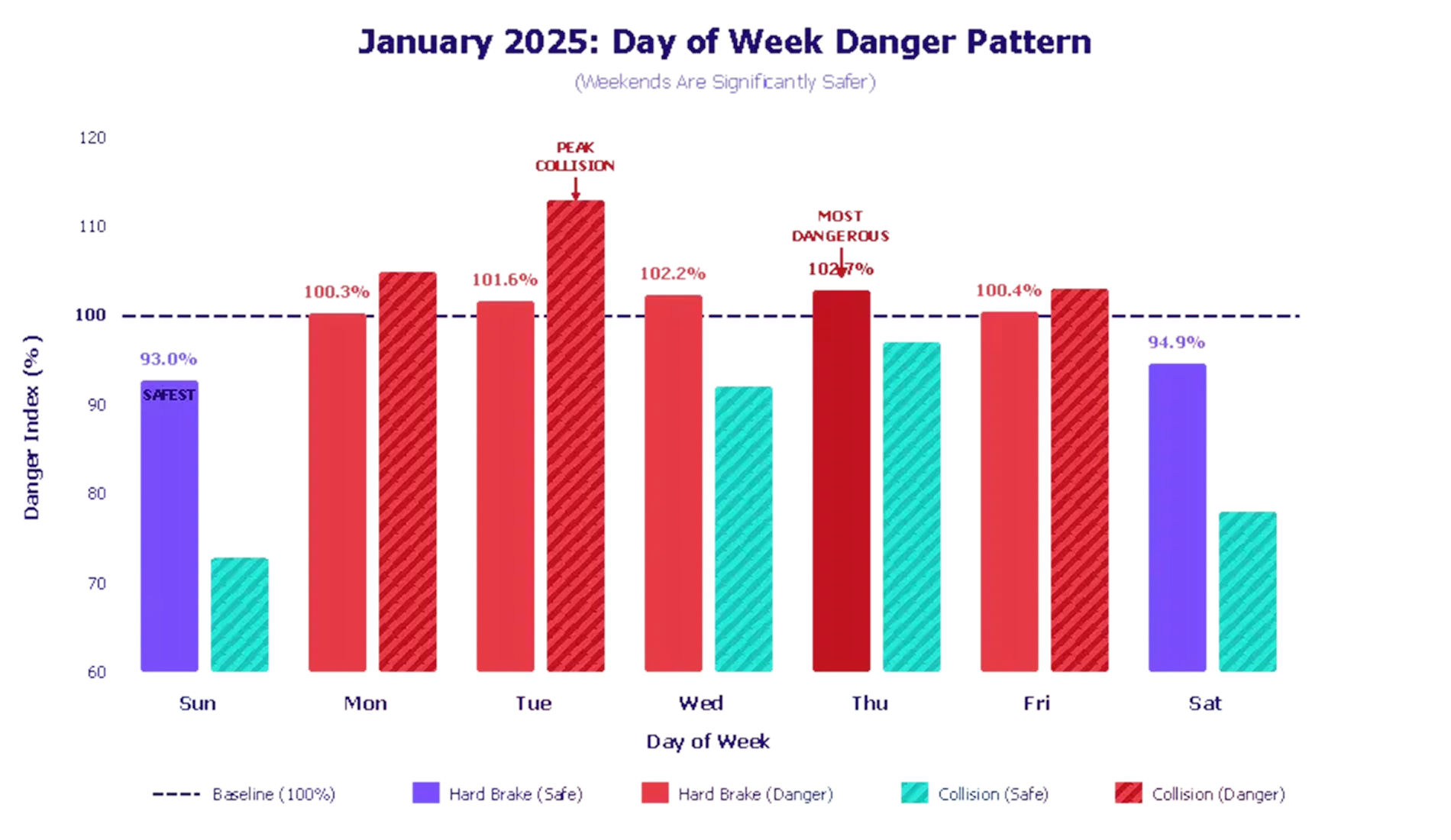
Thursday is the most dangerous day of the week with a 102.7% danger index. Why Thursday?
● Cumulative fatigue from the week
● Highest traffic volume (414K average rides)
● Mental anticipation of weekend causing distraction
● Historically dangerous in other analyses (Thanksgiving, etc.)
But notice the collision index: Tuesday shows 112.6% - the highest collision danger of any day. The"Monday recovery, Tuesday catch-up" pressure may create rushed, aggressive driving that leads tactual crashes.
Weekends are the safety zone: Sunday (93.0%) and Saturday (94.9%) are consistently 5-8 percentage points safer than weekdays. Less commute pressure, more relaxed driving, fewer stressed drivers.
January: Week by Week
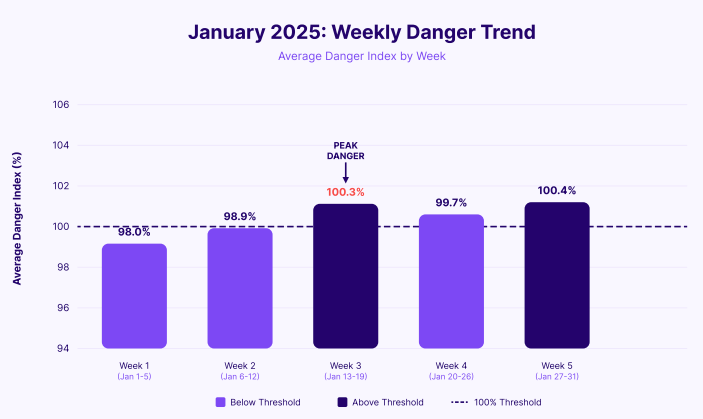
Week 1 (Jan 1-5): The Quiet After the Storm
Danger Index: 98.0% (BELOW baseline)
With 1.79 million rides and a danger index of 98.0%, the first week defied expectations.New Year's Day itself clocked in at just 96.5% - one of the safest days of the month.Why? Lighter traffic. Many people still on vacation. And perhaps those nursing hangovers drove more cautiously (or not at all).
Week 2 (Jan 6-12): The Slow Return
Danger Index: 98.9% (BELOW baseline)
Traffic surged to 2.74 million rides as America returned to work. Yet the danger index remained below baseline at 98.9%. Tuesday through Thursday showed elevated readings (102%+), but the weekend pulled the average down.
Week 3 (Jan 13-19): The Breaking Point
Danger Index: 100.3% (ABOVE baseline) - THE PEAK
This was it. The most dangerous week of January. With 2.87 million rides, the roads reached critical mass. January 15th (Wednesday) - the single most dangerous day of the entire month. By now, the holiday buffer had worn off. Everyone was fully back to the grind, stressed, tired, and pushing through winter.
Weeks 4-5: The New Normal
Danger Index: 99.7% / 100.4%
Late January settled into baseline territory. The chaos of mid-month subsided, but danger remained elevated compared to the surprisingly safe first week.
The Hidden Hours: When Danger Peaks
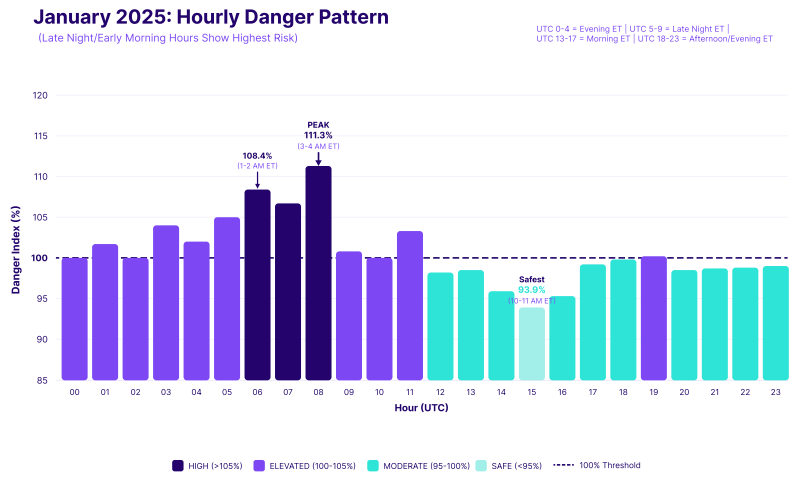

January 2025: Hourly Danger Pattern
The Hidden Hours: When Danger Peaks
The most dangerous hour?
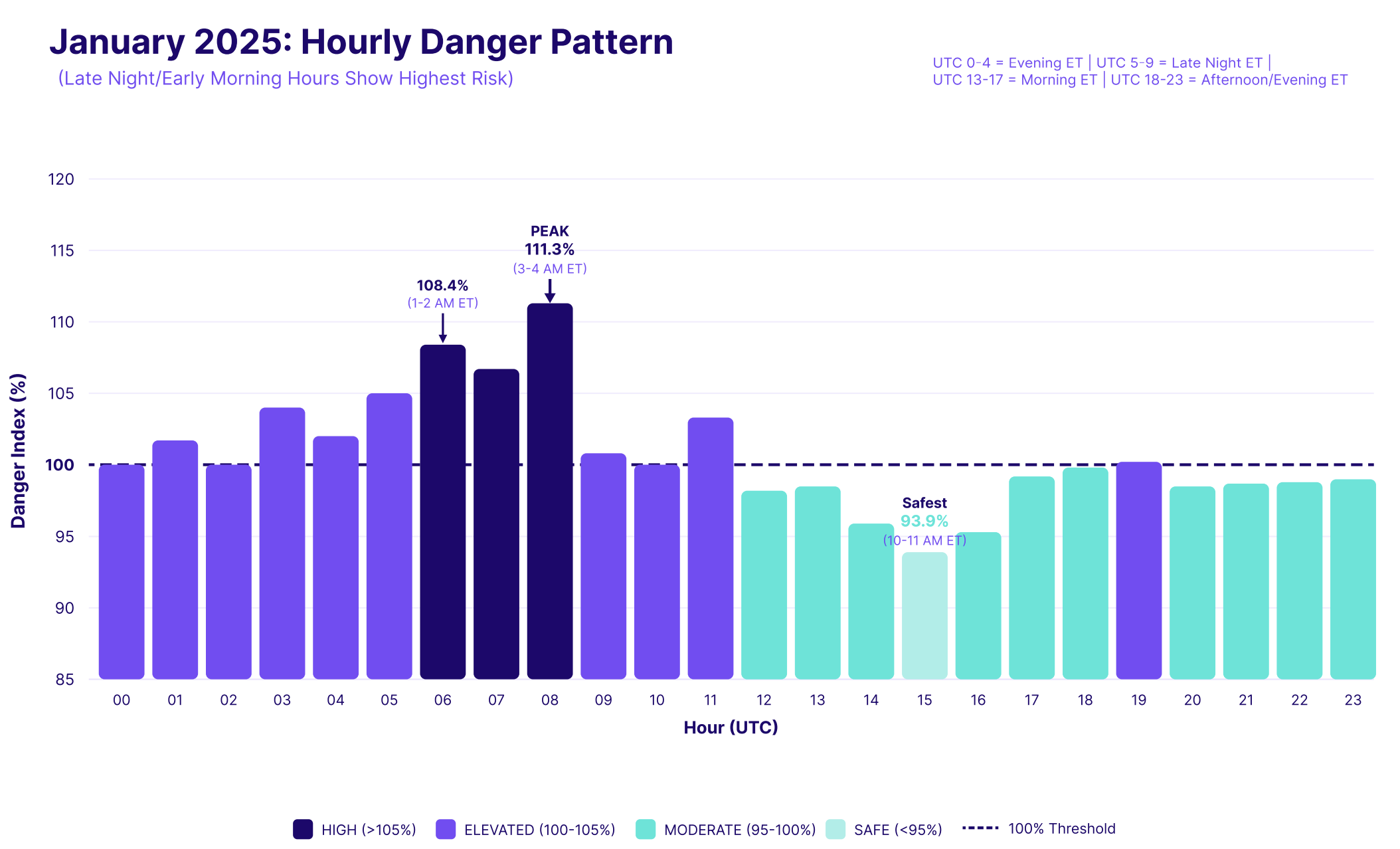
UTC 08:00 (3-4 AM Eastern Time) at 111.3% danger index. This is when fatigue, impairment, and darkness converge. The early morning hours (UTC 05:00-08:00, corresponding to midnight-4 AM in theUS) consistently show the highest danger readings. Meanwhile, mid-morning hours(UTC 14:00-16:00, or 9-11 AM Eastern) are the safest, with readings below 96%.

REGIONAL SAFETYCOMPARISON
The Regional Divide: East vs West
REGIONAL SAFETYCOMPARISON
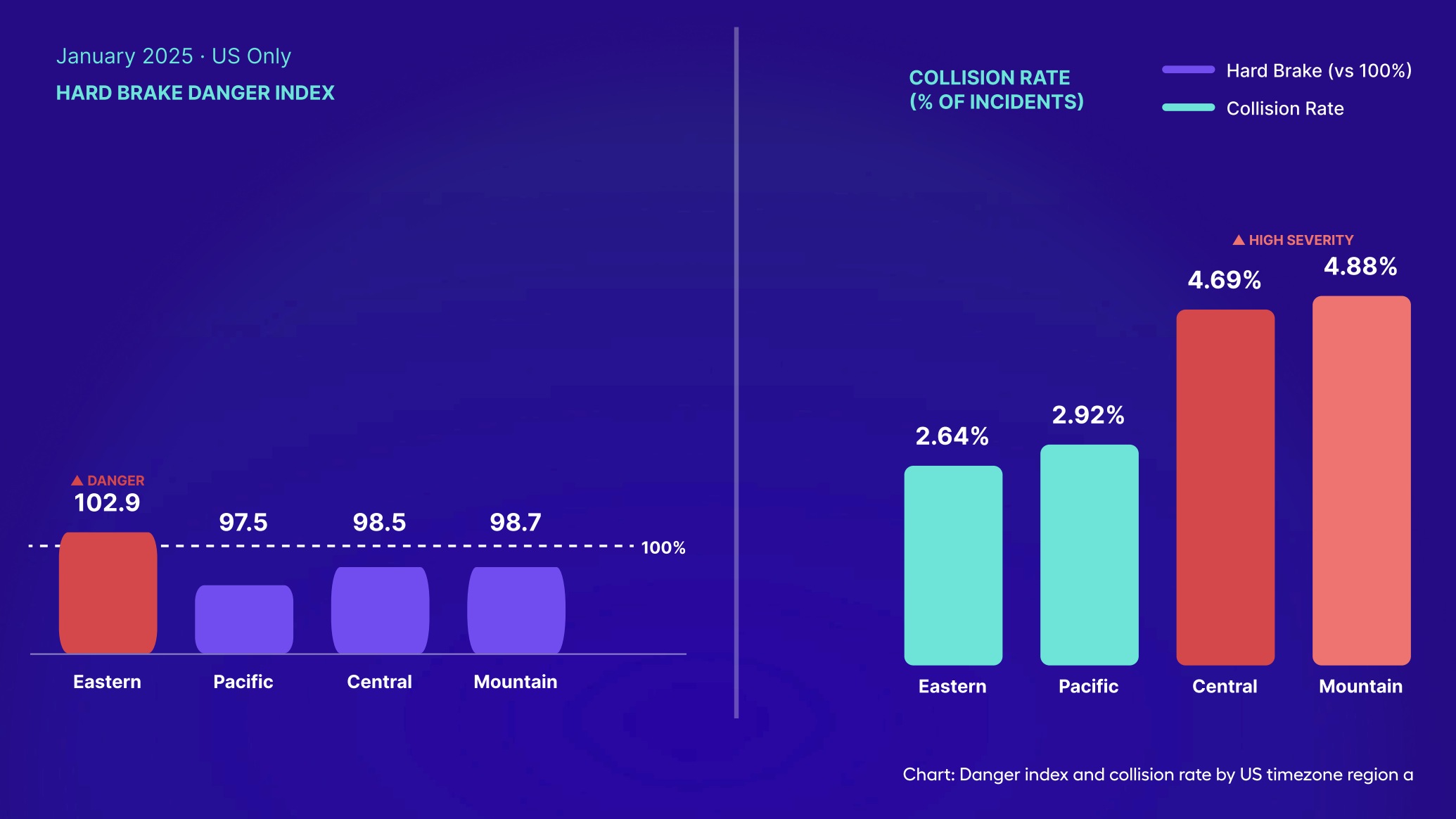
The East Coast leads in danger. The Eastern timezone shows a 102.9% danger index - the onlyregion above baseline. Pacific, Central, and Mountain all hover around 97-99%.
Why might the East be more dangerous? Higher population density. More urban driving. Greater traffic congestion. Older infrastructure. The stress of the Boston-to-DC corridor shows up in the data.
Recommendations: Navigating January Safely
But here's the twist...
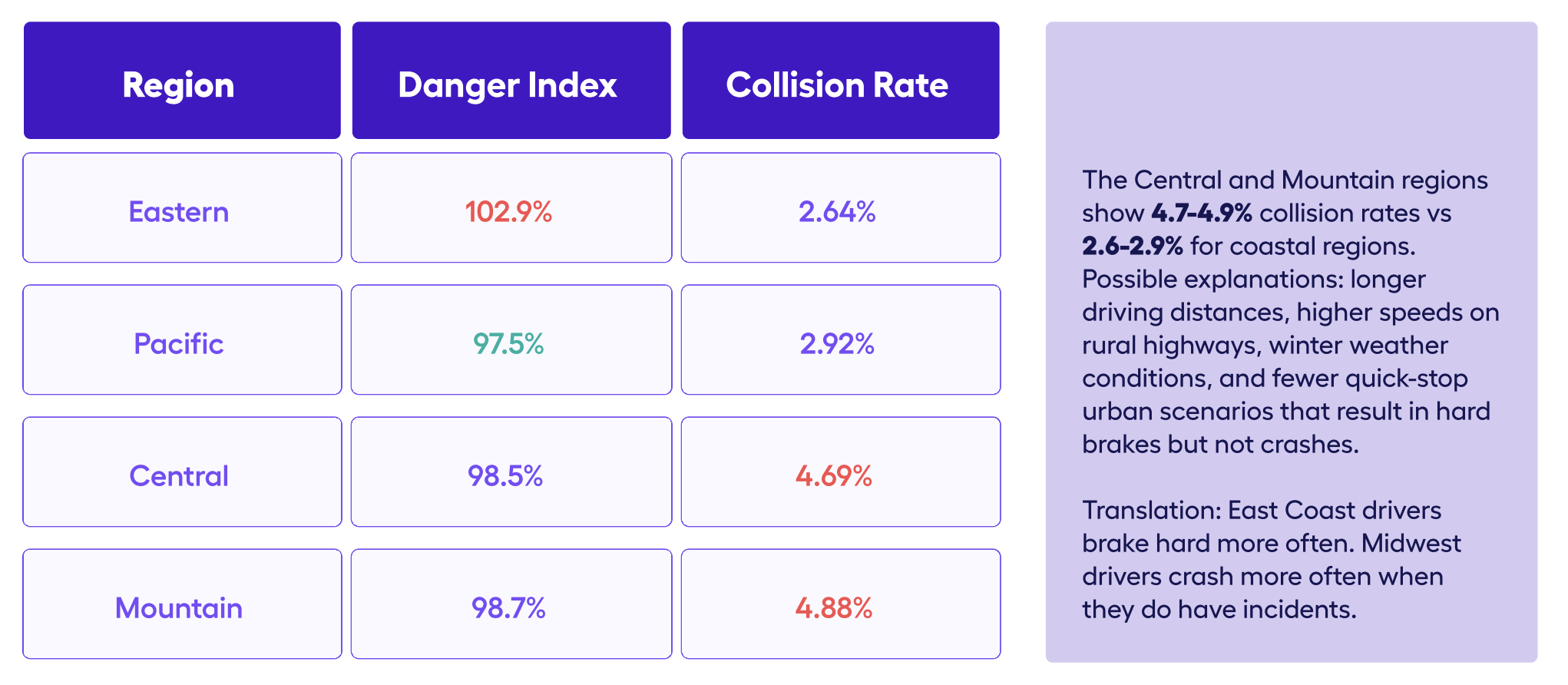
Central and Mountain regions have of coastal regions. nearly DOUBLE the collision rate
Recommendations: Navigating January Safely
SAFEST TIMES
- Weekends (Saturday-Sunday): 5-8% below baseline danger
- Mid-morning hours (9-11 AM local): 94-96% danger index
- Week 1 (Jan 1-5): Surprisingly safe if avoiding late-night hours
- MLK Weekend (Jan 18-19): Among the safest days of the month
APPROACH WITH CAUTION
- Mid-January weekdays (Jan 13-17): Peak danger period
- Thursday driving: Cumulative weekly fatigue peaks
- Tuesday collisions: Highest crash propensity day
- East Coast urban driving: Above-baseline danger
HIGH RISK AVOID IF POSSIBLE
- Late night/early morning (midnight-4 AM): 105-111% danger
- Week 1 late nights: Post-NYE impairment (20-40% elevated)
- January 15th specifically: The single most dangerous day (106.8%)
- Central/Mountain long-distance drives: Higher crash severity
The Counterintuitive Conclusion
The Counterintuitive Conclusion
The danger isn't in the aftermath of celebration - it's in the return to normalcy.
January 2025 teaches us that the post-holiday period isn't when risk spikes. The real danger emerges two weeks later, when everyone is fully back to routine, stressed about work, exhausted from winter, and driving on autopilot.
Week 3 of January - not Week 1 - is when the roads become most treacherous. The "safety buffer" of holiday relaxation wears off, and the grind sets in. That's when the 106.8% days happen.
Stay alert. Drive defensively. And maybe take that extra coffee break on Thursday afternoon.
Want to dive deeper?
Nexar helps industry leaders turn vision into value. Dive into real-world success stories where our data redefined the road ahead - and see what it can do for you.